Data processing system analysis and development
Data flow diagrams (DFD) — which include data source, data flow, data storage and process — are used to represent system interrelationships, data, system or process-oriented workflow.
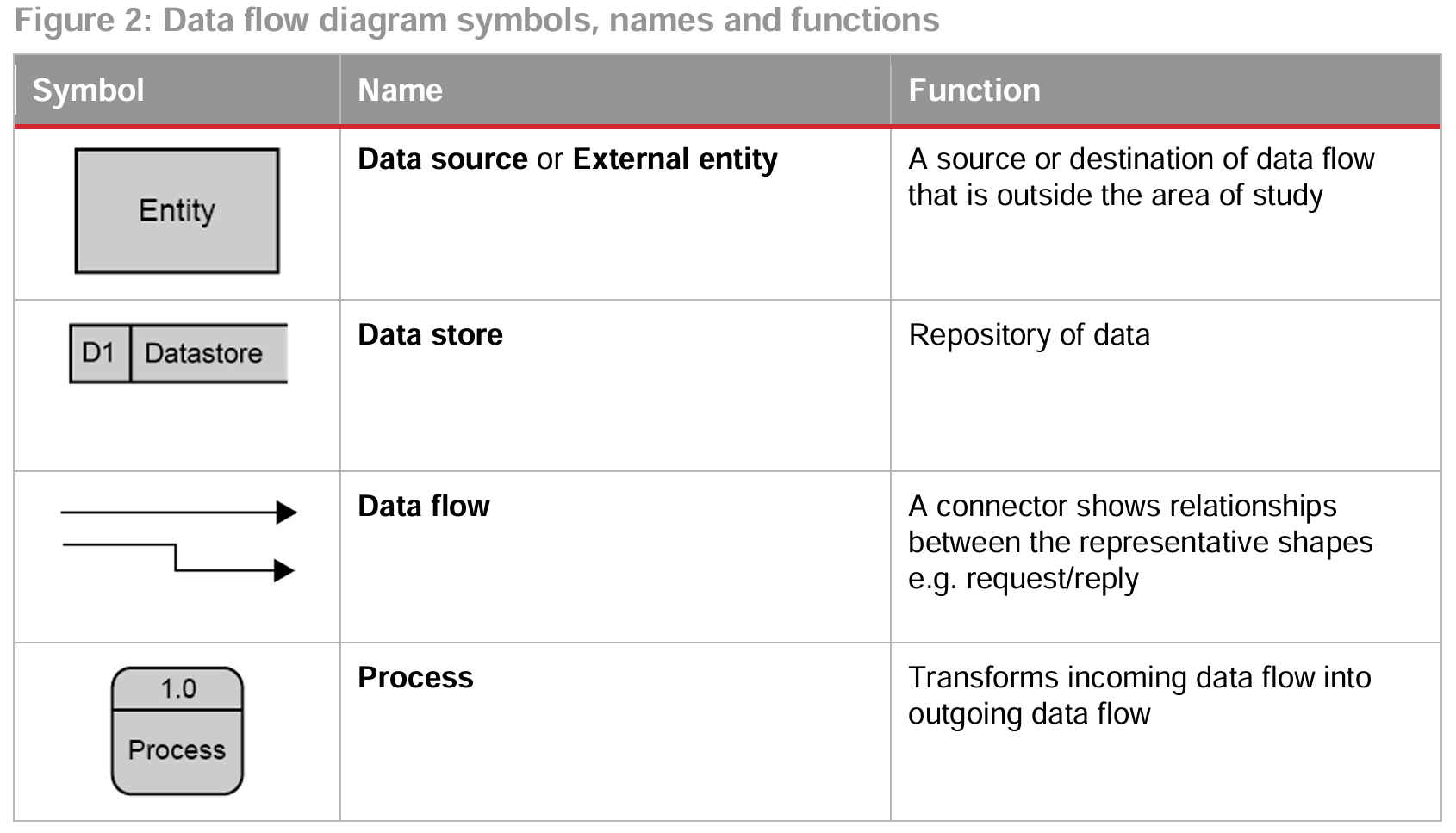
Digital Solutions uses Gane-Sarson (1979) notation for data flow diagrams. Four basic symbols are used to visually represent data source, flow, storage and processes, as shown:
Conventions
When students develop data flow diagrams, they should:- choose meaningful names for processes, flows and data stores, including
- nouns for entities, data flows and data stores
- verbs or verb-object names for processes that describes what the process does, e.g. check credentials
- number processes and data stores
- identify data stores as
- D — data on disk (retained even if the system is turned off)
- M — manual data (physical files, paper records or manually processed digital data)
- T — temporary (not retained long-term) or transient (rapidly changing, e.g. RAM, cache).
Information comes from and goes to entities and data stores via processes, therefore entities may not:
- send data directly to other entities
- send data directly to data stores (data must be processed first)
- get data directly from data stores (data must be processed first).